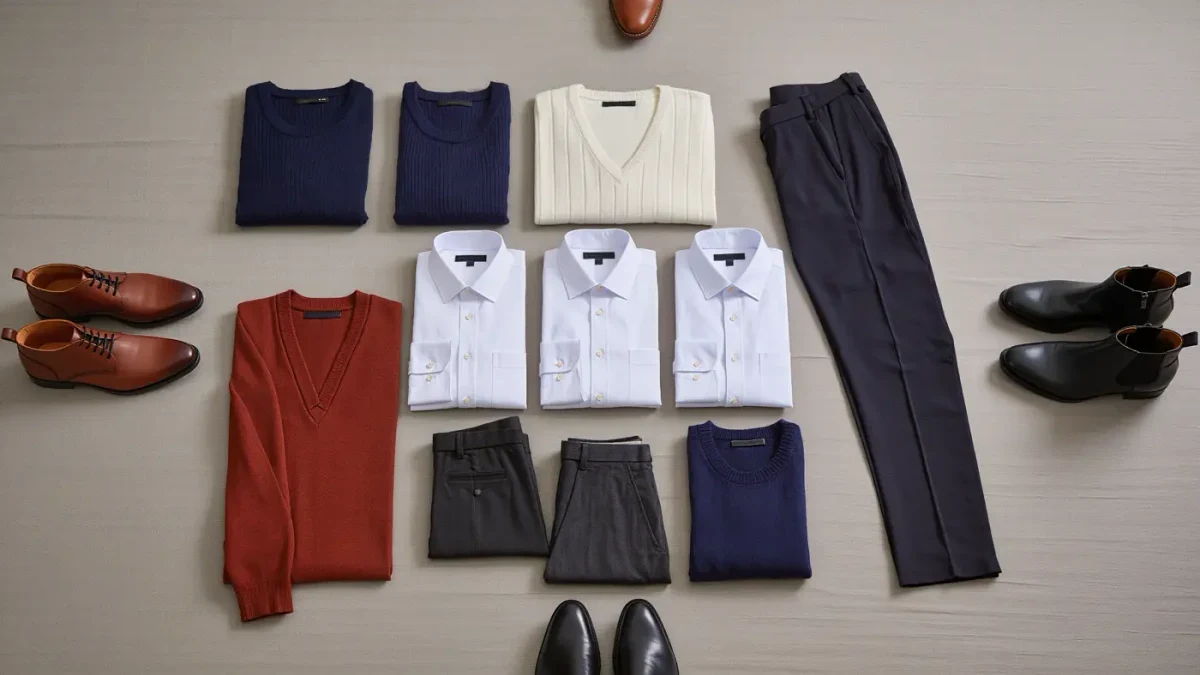
A working capsule wardrobe is 30 pieces: roughly 8 tops, 6 bottoms, 4 layers, 4 pairs of shoes, 2 dresses or suits, and 6 functional pieces — and the number matters less than the roles each piece plays. The algorithm below runs in one afternoon and three passes over your closet: count, define, fill. It produces a wardrobe where every piece has at least three partners, which is the only test of a capsule that matters. Start with the count, not the shopping list — the closet usually answers half the questions already.
Zebule publishes information, not shopping advice; the algorithm is a method, and the pieces it selects are yours alone.
What counts as one of the 30 pieces?
Clothes and shoes only. Underwear, hosiery, sleepwear, sport-specific gear, and occasionwear you wear less than twice a year sit outside the count. Accessories stay outside too — belts and scarves are modifiers, not slots, and counting them pads the number without adding outfits. The honest boundary: if you would pack it for a two-week trip, it counts. That single rule keeps the capsule practical instead of aspirational.
Pass one: count what you actually wear
- Hang everything with the hanger facing backward. When you wear and re-hang a piece, flip the hanger normally. Six to eight weeks gives a fair sample across weather; if you start in a shoulder season, extend to cover one hot and one cold month.
- Log the pieces you wear repeatedly for two weeks without any hanger system: photograph each day's outfit. Two weeks of photos will show you a repeating cast of perhaps 12 pieces — that cast is the seed of the capsule, not the items you wish you wore.
- Pull the backward-hanger pieces plus your photo cast into one rail. This is your real wardrobe, as opposed to your stored wardrobe. Most closets produce 20 to 35 pieces here, which means the capsule may already half-exist.
The first pass changes nothing about your clothes — it changes what you know about them. Skip the hanger system if you keep a consistent photo log instead; the data matters, not the method.
Pass two: define the base
- Choose one dark neutral and one light neutral from what you already own most of — navy with ecru, charcoal with white, brown with stone. The base is descriptive, not aspirational: count your hangers by color family and the base picks itself. Capsules fail when the base is a color you admire rather than the color you own.
- Name one accent color that appears in at least three pieces you already own. One accent, not four — a 30-piece wardrobe with one accent produces more combinations than the same wardrobe with scattered accents, because every accent piece then pairs with every neutral.
- Set the formality line. Write down how many days a week your real calendar needs smarter dress versus casual. A capsule for four office days and three home days allocates slots 60/40, and matching this ratio is what makes a capsule feel effortless once built.
The base pass changes how you see the rail: pieces outside the palette-and-formality line become candidates to leave, and pieces inside it become candidates to multiply. Skip nothing here except second accents — that discipline is the algorithm.
Pass three: fill the roles
- Assign every rail piece a role and count the roles: 8 tops (a mix of at least 3 that layer under others), 6 bottoms, 4 layers, 4 shoes, 2 dresses or suits, 6 functional pieces such as a true coat, knitwear, and dedicated winter gear.
- Test each piece against the rule of three: name three complete outfits it joins. If you cannot name three with pieces already on the rail, the piece is either a duplicate of a role already filled or an orphan — and orphans, however loved, do not make the capsule.
- List the gaps as roles, not items: 'second mid-layer in the dark neutral', not 'green cardigan'. Shopping by role is what stops a capsule from drifting back into a closet. Fill gaps only when a real gap appears twice in two weeks of wearing.
- Freeze the list at 30 and store the rest. Box the non-capsule clothes out of sight for three months — not donated, boxed. The capsule only proves itself against a visible alternative, and the box returns choice once the habit is set.
The third pass changes the wardrobe's behavior: with every piece playing at least three partnerships, morning decisions collapse from 'what do I own' to 'which of four known combinations'. Skip buying entirely in month one; nearly every gap you feel in the first weeks is a styling gap, not a wardrobe gap.
How do you keep a capsule alive past a season?
Run one swap a season: as weather changes, up to five pieces rotate between the box and the rail, and every incoming piece must pass the rule of three against the current capsule. Review the hanger record quarterly — pieces that never flip are warning you before you are bored of them. The capsule is a system, not a monument: 30 is the operating number, and the discipline of roles, one accent, and the rule of three is what keeps a working wardrobe from quietly becoming a stored one again.
Sources for this piece include Reuters coverage of retail and apparel markets.
For more context, read How to build an outfit around one color.
For more context, read matching belt and shoes.
For more context, read How to Layer Your Skincare Products in the Right Order.