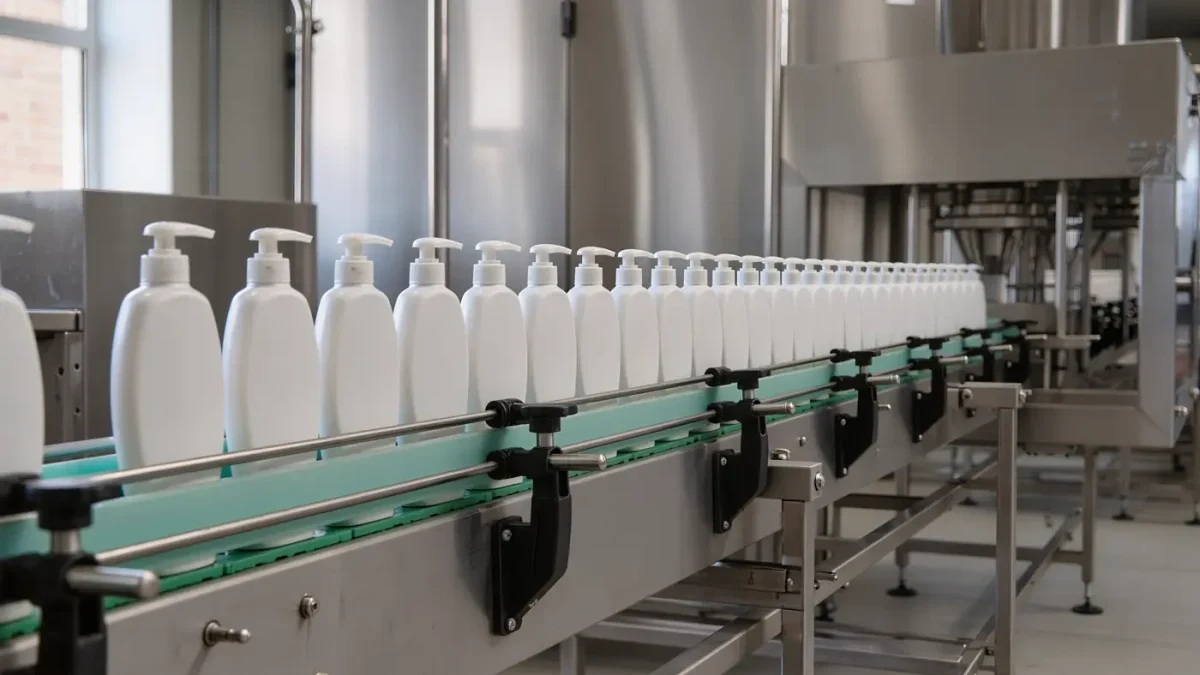
In the week of May 11–16, 2026, per Global Cosmetics News, Henkel — the group behind Schwarzkopf and a vast haircare and styling portfolio — advanced its sustainable packaging agenda. Packaging rarely makes the beauty feed, but it is the industry's largest physical footprint and the part of your routine you throw away monthly. When a manufacturer at Henkel's scale moves, the material options on your shelf move with it.
Usual note: this is industry reporting, not environmental or investment advice.
Why does packaging decide more than formulas?
A shampoo is water, surfactant, fragrance, and a plastic bottle — and the bottle is often the largest share of the product's cradle-to-shelf footprint. Haircare runs at mass scale and low margins, so a few cents of material per unit, multiplied across hundreds of millions of bottles, is the difference between a sustainability target and a press release. That is why packaging moves in manufacturer announcements like this one: only the maker of the bottle can re-engineer the bottle.
What is actually changing in the packaging?
Three concrete shifts define the 2026 wave, Henkel's among them. Mono-material bottles: replacing layered plastics, which recyclers cannot separate, with single-polymer construction that actual recycling streams accept. Post-consumer recycled content: bottles made partly from plastic that already lived a life, which cuts virgin demand without changing what is inside. Refill architecture: rigid 'forever bottles' with pouch or cartridge refills that ship less air and less plastic per wash. None of this requires you to change your routine — that is the point. The sustainable version of your shampoo should behave identically in the shower and differently in the bin.
Does refill culture actually work for consumers?
Selectively, and the evidence so far says so. Refills shine where usage is frequent, predictable, and spill-tolerant: shampoo, conditioner, body wash, laundry. They struggle where hygiene and dosage precision matter: mascara, jarred creams with volatile actives, anything airless-pumped. The practiced approach is unmoved by branding — do the arithmetic. A refill is worth it when the per-milliliter price beats the bottle and you genuinely finish the product; otherwise it is shelf sculpture. Check the recycling code on the pouch too, because some refill films remain unrecyclable even when the parent bottle is not.
Why does manufacturer scale matter more than brand promises?
Because packaging change is an industrial event, not a design decision. A bottle redesign means new molds, new filling lines, new supplier contracts, and a shelf-life validation cycle — commitments only a manufacturer with volume can amortize. When a group at Henkel's scale standardizes on mono-material and recycled-content formats, packaging suppliers retool for the whole market, unit costs fall, and mid-size brands inherit infrastructure they could never fund alone. Big-company announcements read as dull; they are the mechanism by which sustainability stops being a premium price tag and becomes the default bottle on the mid-shelf.
The desk's read
Manufacturer-level packaging news is less glamorous than a launch, and more consequential. When Schwarzkopf-scale brands standardize mono-material and recycled-content bottles, the suppliers retool, the costs fall, and mid-size brands inherit the infrastructure — sustainability becoming plumbing rather than positioning. The reader's role stays simple: buy the refill when the math works, recycle by your municipality's actual rules, and distrust any packaging claim that cannot name a material. The bottle you rinse tomorrow is the news, arriving one shower at a time.
For more context, read e.l.f.'s skincare arms hit $450 million — the mass-prestige wall just fell.
For more context, read beauty m&a 2026.
For more context, read ulta beauty raised outlook 2026.