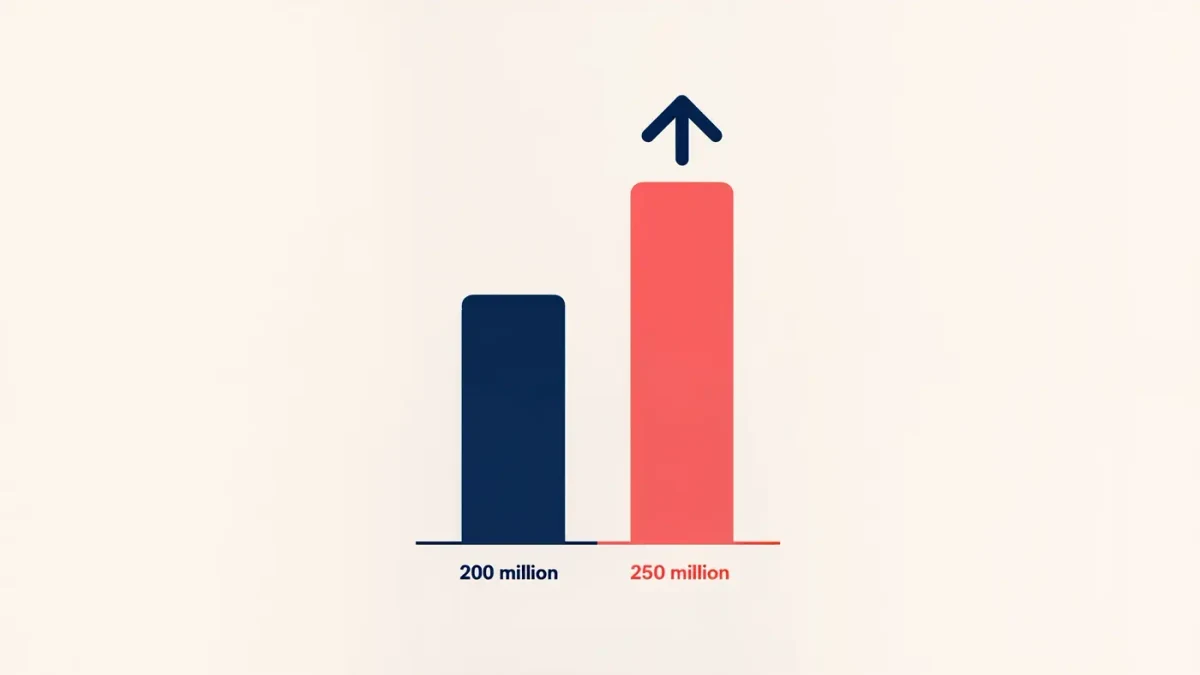
Two numbers from e.l.f. Beauty's fiscal 2026, as reported by Yahoo Finance, deserve a permanent place in your mental model of the beauty aisle: e.l.f. SKIN at roughly $200 million in global retail sales, and Naturium — the clinical-leaning line the company acquired in 2023 — at nearly $250 million, about double its prior-year performance. Together, a skincare business approaching $450 million built on the thesis that 'affordable' and 'serious' stopped being opposites somewhere around 2023. Fiscal 2026 closed in March, and the results, covered by Reuters, landed before mid-2026; the shelf will spend the rest of the year absorbing them.
Standard note: business reporting here, not investment advice — buy products, not tickers.
How does a $12 serum get taken seriously?
By changing what the price signals. The mass-prestige divide once mapped to real differences: ingredient sourcing, formulation investment, packaging that protects actives. The last five years flattened much of that. Contract manufacturers now offer proven actives — niacinamide, squalane, ceramide systems — at costs that let a $15 bottle carry a respectable formula, and ingredient-literate shoppers check concentration claims rather than logos. e.l.f.'s skincare numbers are the receipt for that shift: the company priced to the new reality and let volume do the talking.
Why does Naturium doubling matter more than e.l.f. SKIN's $200 million?
Because Naturium tests a different hypothesis. e.l.f. SKIN rides its parent's brand halo and retail dominance; Naturium was an independent clinical-priced brand whose value proposition had to survive acquisition, mass distribution, and scale — the classic graveyard of indie credibility. Doubling through that gauntlet suggests the demand for mid-priced, ingredient-forward skincare is deeper than any single label: shoppers are choosing actives per dollar, and the brand is almost an implementation detail. Expect every mass retailer's next-planogram meeting to cite that curve.
What this changes in your routine — practically
Nothing mandatory, plenty by osmosis. Competitive pressure at this price tier means better $12–$20 options every season, so the dupes-hunting habit keeps paying. It also means prestige brands will answer where they can: expect more 'entry' lines from legacy houses and more mid-tier pricing from clinical ones, until the shelf becomes a continuous slope rather than two cliffs. The evaluation rubric survives all of it: actives listed near the top, packaging that shields what oxidizes, price per usable milliliter, and a brand that publishes what it will not claim.
What should you expect from the copycats this will spawn?
Everything, immediately — and quality will vary accordingly. A success at this scale guarantees a wave of 'dupe-first' launches built to look clinical rather than be clinical: molecule names on the front, token concentrations in the back. The defense is unchanged from any other wave of imitation: verify the active appears high in the ingredient list, be skeptical of compounds named for marketing rather than effect, and remember that texture and preservation cost money that only shows up in use. The ironic result of affordable skincare winning is that cheap skincare now has more to hide, not less.
The desk's read
Nearly $450 million across two skincare properties is the market confirming a permanent category structure: mass-efficient clinical skincare is no longer a niche between drugstore and derm, it is the center of gravity. For readers, the era of apologizing for affordable skincare is officially over. The task now is discernment at every price — which is, conveniently, the one skill this desk exists to practice with you.
For more context, read Obagi Medical is in play — and clinical skincare is the prize.
For more context, read ulta beauty raised outlook 2026.
For more context, read beauty m&a 2026.